Cold Email Replies But No Meetings: The Reply-to-Meeting Gap and How to Close It
You are getting cold email replies but no meetings, and it is maddening because a reply is supposed to be the hard part. The list works, the copy earns a response, prospects say “sounds interesting” or “what does this cost,” and then the thread dies somewhere between that reply and a slot on the calendar. The pitch is not your problem. The handoff from interest to booked call is.
This is the reply-to-meeting gap, and it is the most expensive leak in outbound because it wastes the leads you already paid to generate. Below are the six reasons a healthy reply rate stalls before it books, and the specific fix for each. None of them require rewriting your sequence. They change what happens after someone raises their hand.
Why you get cold email replies but no meetings
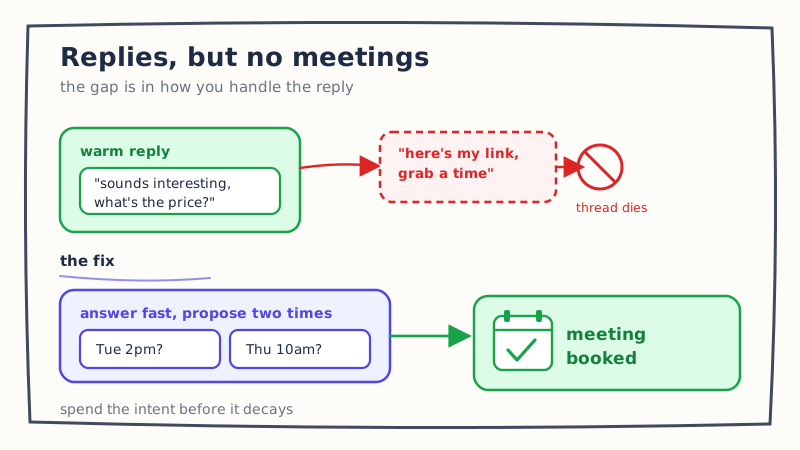
A reply and a booked meeting are two different sales. The first email sells the idea of a conversation. The reply that follows is the prospect saying “maybe,” and “maybe” has a short shelf life. Every reply arrives with a small window of intent attached, and that window closes fast: by tone (they cool off), by calendar (they get busy), and by memory (they forget why they were curious). The job between reply and meeting is to spend that intent before it decays, not to admire that you earned it.
Most teams lose here for a boring reason. The sequence is automated and measured, but the reply handling is manual and invisible. Nobody owns it, nobody times it, and the warmest signal in your funnel lands in a sending inbox that exists to send, not to answer. If your reply-to-demo conversion rate is the number you cannot seem to move, this is almost always why.
The six reasons interest stalls before the calendar
1. You send a calendar link as the first response
The single most common reply-to-meeting killer is answering “interested” with “here’s my Calendly, grab a time.” It feels efficient. It reads as a chore. You have taken a warm human moment and handed the prospect homework: open the link, scan a grid, pick a slot, commit in public. Friction at the exact moment intent is highest.
Propose two specific times instead. “Would Tuesday at 2pm or Thursday at 10am work? I will send an invite either way.” Two options remove decision fatigue, keep the thread conversational, and let the prospect say yes in five words. Save the scheduling link for after they pick, or for the rare prospect who asks for it.
2. You reply too slowly to catch the intent
Speed is not a nice-to-have on inbound replies, it is the whole game. Interest decays by the hour, and a prospect who was curious on Monday morning is buried under their own inbox by Monday afternoon. The teams that win the reply-to-meeting race answer in minutes, not the next business day, because the reply arrived while the prospect was still thinking about you.
Manual reply handling cannot hold that standard across a full campaign. Replies come in during meetings, after hours, and across time zones, and a rep checking between calls will always be late to some of them. We broke down why the clock matters this much in how five-minute response times increase conversions. The short version: slow is the same as silent to a prospect who has moved on.
3. You pitch when the reply asked a question
A prospect who replies “how is this different from what we use now?” is not asking for your deck. They are asking one question, and the fastest path to a meeting is to answer that one question well, then propose a time to go deeper. Teams lose the thread by responding to a specific question with a generic pitch, which reads as “you did not actually read what I wrote.”
Match the response to the reply. Answer the question in two sentences, add one line of relevant proof, and end with a time. The meeting is the reward for a useful answer, not the substitute for one. This is also where reply classification matters: a pricing question, a “send me info” reply, and a referral each need a different next move, and treating them all the same is how good replies go cold.
4. You treat “not right now” as a dead end
“We are not looking at this until next quarter” is not a no. It is a date. Most teams either give up on it or fire the next generic follow-up, and both waste a lead that told you exactly when to come back. The reply-to-meeting fix is to acknowledge the timing, ask permission to reconnect on the prospect’s stated timeline, and then actually do it when the date arrives.
That requires the discipline to park a thread and resurface it on schedule, which is precisely the kind of follow-through manual pipelines drop. We covered the playbook in how AI reply agents handle “not right now, circle back later” replies. A soft yes with a date on it converts far better than a fresh cold lead, if you show up when you said you would.
5. Your CTA puts the work on the prospect
“Let me know if you’d like to chat” and “happy to connect whenever works for you” feel polite, but they hand the prospect the burden of proposing, deciding, and driving. A busy buyer will not do your scheduling for you. A vague, effort-shifting CTA is why a reply that started warm ends with “sure, send me some times” and then goes quiet, because you asked them to do the next step and they never got to it.
Make the ask small, specific, and single. One clear next step, one proposed time, one line. The prospect’s only job should be to say yes or counter with a time that works better. Every extra decision you push onto them is another place the thread can stall.
6. Replies rot in an inbox nobody owns
The infrastructure failure underneath all of the above: replies land across multiple sending inboxes and domains, and no single person is accountable for catching and answering them fast. As teams add mailboxes to scale sending, inbound reply volume outpaces the capacity of the SDRs who are supposed to work it, and the warmest leads slip through the cracks between accounts.
Fix this with ownership and a standard, not heroics. Route every reply into one view, set a response-time target for each reply type (positive replies in minutes, questions within the hour), and measure whether it is met. A process that depends on one attentive rep breaks the week they are on vacation. A process built into your infrastructure survives.
A simple reply-to-meeting workflow
Put the six fixes together and the workflow is short:
- Centralize every reply from every inbox into one place, so nothing hides in an account nobody watches.
- Classify the reply the moment it lands: positive, question, objection, referral, or “not now with a date.”
- Respond fast and in kind. Answer questions, handle the objection, acknowledge the timing, and always end with two specific proposed times.
- Never lead with a bare calendar link. Offer times first, send the invite once they pick.
- Park the “not now” replies with their date and resurface them on schedule.
- Log the outcome, not just the activity: reply type, response time, and whether it booked.
The point is not more tooling. It is that “handle the reply well and fast” stops being something you hope a rep remembers and becomes something that happens on every thread.
How Underfive closes the reply-to-meeting gap
Running that workflow by hand, across every inbox, in minutes, all day, is the part humans cannot sustain. Underfive is built for exactly this handoff. It watches the replies your campaigns generate, classifies each one by intent, and responds in a human voice within minutes, proposing specific times instead of dumping a link and moving the thread toward a booked meeting rather than a dead end.
That means a pricing question gets answered and turned into a call, a “not right now” gets parked and revived on the prospect’s own timeline, and a positive reply never sits unanswered while a rep is in a meeting. The reply-handling and meeting-booking features are designed to spend that window of intent before it decays, which is the difference between a reply rate you are proud of and a calendar that actually fills. If booking is the metric you are trying to move, our guide to improving your cold email meeting booking rate pairs well with this.
Start with the two changes that pay off this week
You do not need to rebuild anything to start closing the gap. Do two things. First, stop sending calendar links as your opening move and propose two specific times instead. Second, cut your response time on positive replies from “sometime today” to “within the hour,” even if that means a simpler answer sent faster. Those two changes alone move the needle on the same replies you are already earning. Then work down the list. A reply is intent you already paid for. The only real waste is letting it expire on the table.