
AI Reply Agent vs Woodpecker: Which Actually Handles Your Cold Email Replies?
Woodpecker has been a trusted name in cold email for a long time. It sends personalized sequences, protects your sending reputation with careful throttling, and it has one genuinely clever trick: it watches your inbox for replies and stops following up the moment a prospect responds. For a lot of teams, that reliability is exactly why they picked it.
But there is a gap that Woodpecker was never designed to fill. Detecting that a reply arrived is not the same as answering it. This is an honest breakdown of what Woodpecker does well, where it stops, and when you actually need a dedicated AI reply agent rather than a better sender.
What Woodpecker is built to do
Woodpecker is, at its heart, a deliverability-first sending engine. You import a list, write a personalized sequence, and it drips those messages out at a human-looking pace so your domain stays healthy. It handles inbox rotation, warm-up, bounce detection, and the unglamorous reliability work that keeps your emails landing in the primary tab instead of spam.
Its standout feature is reply detection. Woodpecker reads your connected mailbox, notices when a prospect responds, and automatically pauses the remaining follow-ups for that person so they never get a robotic “just bumping this” after they already answered. That is a real quality-of-life win, and it is more than a lot of senders bother to do.
Where it gets thin is the step immediately after detection: reading the reply, understanding what the prospect actually wants, and sending the right response fast enough to keep the conversation alive.
What a dedicated AI reply agent is built to do
An AI reply agent starts exactly where Woodpecker’s job ends. The moment a prospect replies, it reads the entire thread, works out the intent behind the message, drafts a response in your brand voice, and either sends it or routes it to a human. It is not trying to manage your sending schedule or protect your warm-up. Its whole purpose is to win the conversation that a reply opens up.
That difference in focus shows up in the details that decide whether a warm reply turns into a booked call:
- Context depth. A reply agent reads the full thread, including your original pitch and any back-and-forth, before it writes a single word. It is reasoning about the conversation, not pausing a sequence.
- Response speed. It answers in minutes, at any hour, which is where most of the conversion lift actually lives.
- Judgment. It can field a pricing question, handle an objection, offer a specific meeting time, and recognize the threads it should hand to a person instead of touching.
If you want the deeper version of that argument, we covered it in why five minute response times increase conversions.
The core difference: detection versus conversation
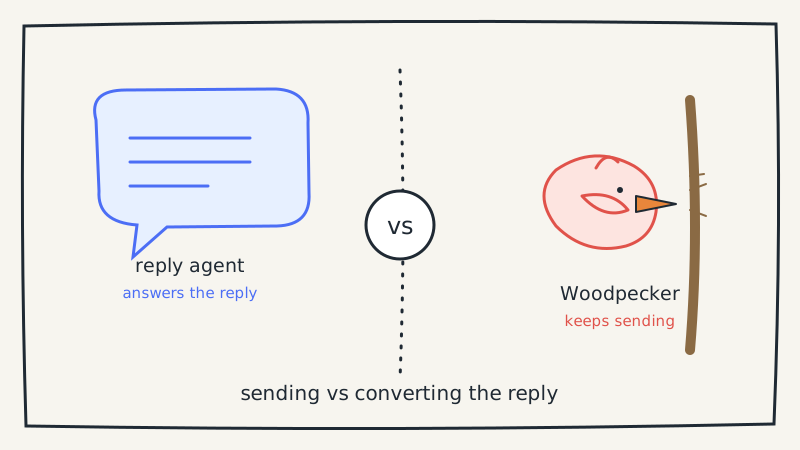
Here is the cleanest way to frame it. Woodpecker’s reply handling tells you that something happened and gets out of the way. A dedicated reply agent decides what to do about it and then does it.
Detection pauses the follow-ups and drops the reply into your inbox for a human to pick up. That is genuinely useful, but the clock starts the second the message arrives. If your rep is asleep, in back-to-back meetings, or three time zones away, that interested prospect sits unanswered for hours. By the time someone opens the thread, the spark of intent has already cooled.
A reply agent closes that gap. It does not just stop the sequence, it answers the reply, asks the qualifying question, and proposes a real time to meet, often before a human has even seen the notification. The person steps in only when the thread genuinely calls for them.
Where Woodpecker is the right call
To be fair, there are clear cases where Woodpecker is the better fit, and pretending otherwise would be dishonest.
If your main concern is deliverability and you want a sender that treats your domain reputation with respect, Woodpecker is excellent. If you run a lean outbound motion with modest reply volume and a rep who genuinely answers within the hour, the built-in detection may be all the reply handling you need. And if you value simplicity over automation depth, Woodpecker’s “pause on reply and let me take it from here” model is refreshingly uncomplicated.
Woodpecker is a mature sender with a thoughtful reply-detection feature. If reliable sending is the thing you are actually shopping for, it earns its place in your stack.
Where the dedicated reply agent wins
The case flips the moment reply speed or reply volume becomes your bottleneck rather than sending volume.
If your reps are buried under inbound replies and good threads keep going cold in the inbox, pausing the follow-up does not solve anything. It just means the prospect stops hearing from you entirely while they wait for a human. We wrote about this exact failure pattern in when inbound reply volume outpaces SDR capacity, and it is one of the most common reasons teams outgrow a sender’s built-in reply handling.
The reply agent also wins on nights, weekends, and time zones. A prospect who replies at 9pm gets a thoughtful, on-brand answer at 9:01pm instead of at 9am the next morning, by which point two other vendors have already responded. Consistency at the reply layer is not a nice-to-have. It is where the conversion difference quietly compounds.
There is a deliverability angle too. Because a reply agent responds inside real, human-started threads rather than blasting new cold volume, it does not add sending risk. If protecting your inbox reputation is the reason you liked Woodpecker in the first place, it is worth reading do AI reply agents hurt email deliverability before you assume more automation means more risk.
Can you run both together?
Yes, and for a lot of teams that is the smartest setup. You do not have to rip out Woodpecker to add a reply agent. Let Woodpecker do what it is good at, sending clean sequences and protecting your domain, and connect a dedicated reply agent to the inbox those sequences fill.
In that stack, Woodpecker generates the replies and the AI reply agent converts them. The sender keeps the top of your funnel full and your reputation intact, while the reply agent makes sure none of the interest it generates leaks out of an inbox while a human is offline. You get the sending discipline and the conversion muscle without trading one for the other.
A quick decision guide
Ask yourself three questions.
- Is my bottleneck sending or replying? If you cannot get enough clean touches out the door, invest in the sender. If you cannot keep up with the replies you already get, invest in the reply agent.
- How fast do warm replies actually get answered today? If the honest answer is measured in hours, a dedicated agent will move your numbers more than any sequencing tweak.
- Do good threads die in the inbox overnight or over the weekend? If yes, pausing the follow-up does not fix it. You need something that responds, not something that steps aside.
Most growing teams end up needing both, and they usually discover it in that order: sender first, then a reply agent once the replies start outrunning the humans.
The takeaway
Woodpecker is a dependable sender with a smart reply-detection layer that knows when to stop talking. A dedicated AI reply agent is a conversation engine that turns those detected replies into booked meetings. They are not really competitors so much as two halves of the same funnel.
If you are evaluating Woodpecker purely to handle your cold email replies, be honest about which job you are trying to fill. Detection is not conversation, and the meetings are won in the conversation. When your replies start outrunning your reps, that is the moment a purpose-built reply agent starts paying for itself. You can see how that layer works at underfive.ai.