
AI Reply Agent vs Smartlead: Who Actually Answers Your Cold Email Replies?
Smartlead earned its reputation as a serious sending platform. Unlimited email accounts, automatic inbox rotation, built-in warm-up, a unified master inbox, and enough deliverability tooling to run agency-scale outbound without torching your domains. If your problem is getting a high volume of personalized cold email out the door reliably, Smartlead is genuinely one of the best tools you can pick.
But there is a line that even a great sender does not cross. Getting an email delivered and pausing the sequence when someone responds is one job. Reading that reply, understanding what the prospect actually wants, and answering fast enough to keep the deal warm is a completely different one. This is an honest breakdown of what Smartlead does well, where its reach ends, and when you genuinely need a dedicated AI reply agent rather than a better sending engine.
What Smartlead is built to do
Smartlead is a high-volume sending and deliverability platform. You connect a large pool of mailboxes, let it rotate sends across them, warm them up automatically, and push personalized multi-step sequences to thousands of prospects. Its master inbox then pulls every reply from every connected mailbox into one place, so you are not hopping between twenty Gmail tabs to see who responded.
That is a real strength. Managing deliverability across dozens of inboxes by hand is miserable, and Smartlead makes it close to automatic. The master inbox is a genuine quality-of-life upgrade over checking each mailbox separately, and the sequencing engine is flexible enough for complex, conditional outbound plays.
Where it thins out is everything that happens after a reply arrives. Smartlead will detect the response, pause the sequence for that prospect, categorize it, and drop it neatly into the master inbox. But at that point its job is essentially done. The reply is now sitting in a queue waiting for a human to read it, interpret the intent, and write back. Smartlead surfaces and organizes the reply. It does not reason about it or answer it for you.
What a dedicated AI reply agent is built to do
An AI reply agent picks up exactly where Smartlead sets the reply down. The moment a prospect responds, it reads the full thread, works out the intent behind the message, drafts a response in your brand voice, and either sends it or routes the thread to a human. It is not trying to rotate your inboxes or protect your warm-up schedule. Its entire purpose is to win the conversation that a reply opens.
That difference in focus shows up in the details that decide whether an interested reply becomes a booked call:
- Context depth. A reply agent reads the whole thread, including your original pitch and every back-and-forth, before it writes a single word. It is reasoning about a conversation, not sorting a queue.
- Response speed. It answers in minutes, at any hour, which is exactly where most of the conversion lift actually lives.
- Judgment. It can field a pricing question, handle a real objection, offer a specific meeting time, and recognize the threads it should escalate to a person instead of touching.
If you want the deeper version of that argument, we laid it out in why five minute response times increase conversions.
The core difference: routing versus conversing
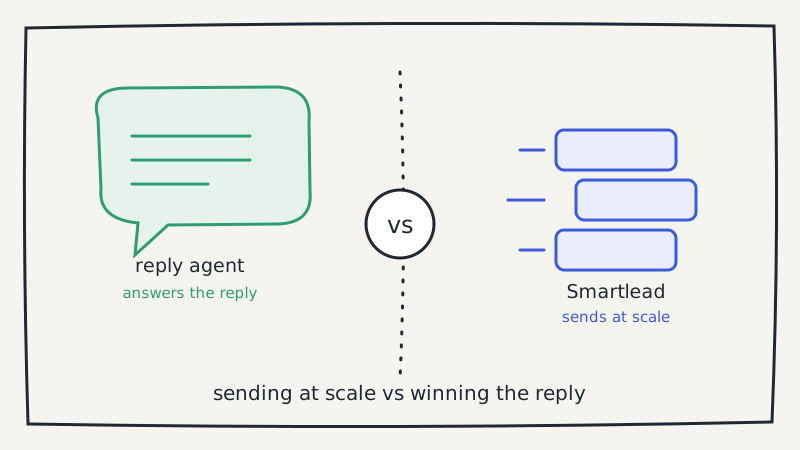
Here is the cleanest way to frame it. Smartlead gets a great first message into a lot of inboxes and then routes the reply into one tidy place for you. A dedicated reply agent decides what to do about that reply and then actually does it.
A master inbox is a better waiting room, not an answer. It solves the problem of scattered replies, but it does nothing about the clock that starts the second a warm reply lands. If you are asleep, heads-down on client work, or three time zones from the prospect, that interested lead sits unanswered in the master inbox for hours. By the time you open it, the spark of intent has cooled and, often, a faster competitor has already replied.
A reply agent closes that gap. It does not merely categorize the response, it answers it, asks the qualifying question, and proposes a real time to meet, frequently before you have even seen the notification. You step in only when the thread genuinely calls for a human.
Where Smartlead is the right call
To be fair, there are clear situations where Smartlead is the better fit, and pretending otherwise would be dishonest.
If your bottleneck is sending volume and deliverability across many mailboxes, Smartlead is hard to beat. Agencies running dozens of client campaigns, teams scaling to thousands of sends per day, and anyone fighting inbox placement will get enormous value from its rotation and warm-up. And if your reply volume is still modest, or you have SDRs who personally clear the master inbox within the hour, its detect-pause-and-organize model may be all the reply handling you currently need.
Smartlead is a powerful sending backbone. If reliable high-volume delivery is the thing you are actually shopping for, it earns its place in your stack. It also pairs naturally with a clean list. Running your addresses through a validation layer like Scrubby before you load them into Smartlead keeps bounce rates down and protects the sender reputation the platform works so hard to build.
Where the dedicated reply agent wins
The case flips the moment reply speed or reply volume becomes your bottleneck instead of sending volume.
When your Smartlead campaigns start working, the replies pile into the master inbox faster than any human can thoughtfully answer them. Good threads quietly go cold while your team is busy elsewhere, and pausing the sequence does nothing to solve that. It just means the prospect stops hearing from you entirely while they wait. We wrote about this exact failure pattern in when inbound reply volume outpaces SDR capacity, and it is one of the most common reasons teams outgrow a sender’s built-in reply handling.
The reply agent also wins on nights, weekends, and time zones. A prospect who replies at 9pm gets a thoughtful, on-brand answer at 9:01pm instead of at 9am the next morning, by which point two other vendors have already responded. Consistency at the reply layer is not a nice-to-have. It is where the conversion difference quietly compounds.
There is a deliverability angle too. Because a reply agent responds inside real, human-started threads rather than adding new cold volume, it does not raise your sending risk. If protecting the inbox reputation you built in Smartlead is part of your concern, it is worth reading do AI reply agents hurt email deliverability before assuming that more automation means more risk.
Can you run both together?
Yes, and for most serious outbound teams that is the smartest setup. You do not have to abandon Smartlead to add a reply agent. Let Smartlead do what it is excellent at, rotating inboxes, warming domains, and pushing clean personalized sequences at scale, and connect a dedicated reply agent to the master inbox those campaigns fill.
In that stack, Smartlead keeps the top of the funnel full and the AI reply agent converts the replies that come back. The sender keeps your delivery reliable and your reputation intact, while the reply agent makes sure none of the interest it generates leaks out of the master inbox while your team is offline. When a thread is ready for a meeting, the agent can even hand off to a booking flow like Kali so the calendar slot gets locked without the usual back-and-forth. If you already run Smartlead, our guide on integrating AI with Smartlead for email follow-ups walks through how the two layers fit together.
A quick decision guide
Ask yourself three questions.
- Is my bottleneck sending or replying? If you cannot get enough personalized touches delivered across enough inboxes, invest in the sender. If you cannot keep up with the replies you already get, invest in the reply agent.
- How fast do warm replies actually get answered today? If the honest answer is measured in hours, a dedicated agent will move your numbers more than any sequencing tweak.
- Do good threads die in the master inbox overnight or over the weekend? If yes, a tidier inbox does not fix it. You need something that responds, not something that organizes.
Most growing teams end up needing both, and they usually discover it in that order: a strong sender first, then a reply agent once the replies start outrunning the humans.
The takeaway
Smartlead is a powerful, reliable way to send personalized cold email at scale and keep every reply in one organized master inbox. A dedicated AI reply agent is a conversation engine that turns the replies those sends generate into booked meetings. They are not really competitors so much as two halves of the same funnel.
If you are evaluating Smartlead purely to handle your cold email replies, be honest about which job you are trying to fill. Routing is not answering, and the meetings are won in the answer. When your replies start outrunning your team, that is the moment a purpose-built reply agent starts paying for itself. You can see how that layer works at underfive.ai.