AI Reply Agent vs GMass: Who Actually Answers Your Cold Email Replies?
GMass earned its following the honest way. It lives inside Gmail, it is cheap, it sends personalized mail merges at scale, and you can be running a campaign in the time it takes most tools to finish onboarding. For solo founders, agencies, and lean sales teams who already run their outbound out of a Google Workspace inbox, that simplicity is the whole appeal.
But there is a line GMass was never built to cross. Getting a personalized email out the door is one job. Reading the reply that comes back, understanding what the prospect actually wants, and answering fast enough to keep the deal warm is a completely different one. This is an honest breakdown of what GMass does well, where its reach ends, and when you genuinely need a dedicated AI reply agent rather than a better sender.
What GMass is built to do
GMass is a sending engine bolted directly onto Gmail. You build a list in a Google Sheet, write a message with merge fields, and it blasts personalized copies to hundreds or thousands of recipients straight from your own mailbox. It handles the mechanics that make mail merge at scale actually work: automatic follow-up sequences that stop when someone replies, open and click tracking, list validation, and sending throttles that keep you from torching your domain on day one.
Its biggest strength is friction. There is no new inbox to learn, no separate platform to log into, no steep setup. If you can write an email in Gmail, you can run a GMass campaign. That low barrier is exactly why so many early-stage outbound motions start here.
Where it thins out is everything that happens after the send. GMass will pause a sequence when a prospect replies, and it will surface that reply in your normal Gmail inbox. But at that point its job is done. The reply is now sitting in your inbox waiting for a human to read it, interpret it, and write back. GMass does not reason about the message or answer it for you.
What a dedicated AI reply agent is built to do
An AI reply agent picks up precisely where GMass sets the reply down. The instant a prospect responds, it reads the full thread, works out the intent behind the message, drafts a response in your brand voice, and either sends it or routes the thread to a human. It is not trying to manage your merge fields or protect your warm-up schedule. Its entire purpose is to win the conversation that a reply opens.
That difference in focus shows up in the details that decide whether an interested reply becomes a booked call:
- Context depth. A reply agent reads the whole thread, including your original pitch and every back-and-forth, before it writes a single word. It is reasoning about a conversation, not pausing a sequence.
- Response speed. It answers in minutes, at any hour, which is exactly where most of the conversion lift actually lives.
- Judgment. It can field a pricing question, handle a real objection, offer a specific meeting time, and recognize the threads it should hand to a person instead of touching.
If you want the deeper version of that argument, we laid it out in why five minute response times increase conversions.
The core difference: sending versus conversing
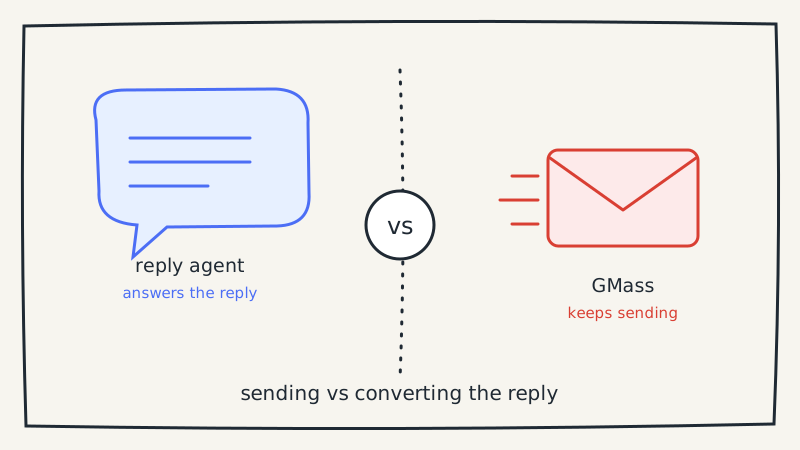
Here is the cleanest way to frame it. GMass gets a great first message into a lot of inboxes and then hands the reply back to you. A dedicated reply agent decides what to do about that reply and then does it.
GMass pausing the follow-up and dropping the response in your Gmail is genuinely useful, but the clock starts the second that message lands. If you are asleep, heads-down on client work, or three time zones from the prospect, that interested lead sits unanswered for hours. By the time you open the thread, the spark of intent has already cooled and, often, a faster competitor has already replied.
A reply agent closes that gap. It does not merely stop the sequence, it answers the reply, asks the qualifying question, and proposes a real time to meet, frequently before you have even seen the Gmail notification. You step in only when the thread genuinely calls for a human.
Where GMass is the right call
To be fair, there are clear situations where GMass is the better fit, and pretending otherwise would be dishonest.
If your bottleneck is getting enough personalized touches out the door cheaply, GMass is hard to beat on price and speed. If you run your entire outbound motion inside Gmail and want to keep it that way, its native integration is a real advantage. And if your reply volume is modest and you personally answer every response within the hour, GMass’s built-in “pause on reply and I will take it from here” model may be all the reply handling you need.
GMass is a lean, capable sender for teams that value simplicity and cost. If fast, cheap sending from Gmail is the thing you are actually shopping for, it earns its place in your stack.
Where the dedicated reply agent wins
The case flips the moment reply speed or reply volume becomes your bottleneck instead of sending volume.
When your campaigns start working, the replies pile up faster than you can thoughtfully answer them, and good threads quietly go cold in the Gmail inbox while you are busy elsewhere. Pausing the follow-up does nothing to solve that. It just means the prospect stops hearing from you entirely while they wait on a human. We wrote about this exact failure pattern in when inbound reply volume outpaces SDR capacity, and it is one of the most common reasons teams outgrow a sender’s built-in reply handling.
The reply agent also wins on nights, weekends, and time zones. A prospect who replies at 9pm gets a thoughtful, on-brand answer at 9:01pm instead of at 9am the next morning, by which point two other vendors have already responded. Consistency at the reply layer is not a nice-to-have. It is where the conversion difference quietly compounds.
There is a deliverability angle too. Because a reply agent responds inside real, human-started threads rather than adding new cold volume, it does not raise your sending risk. If keeping your Gmail reputation intact is part of why you chose GMass in the first place, it is worth reading do AI reply agents hurt email deliverability before assuming that more automation means more risk.
Can you run both together?
Yes, and for a lot of teams that is the smartest setup. You do not have to abandon GMass to add a reply agent. Let GMass do what it is good at, sending clean personalized merges from your Gmail and protecting your domain, and connect a dedicated reply agent to the inbox those campaigns fill.
In that stack, GMass keeps the top of the funnel full and the AI reply agent converts the replies that come back. The sender keeps your sending cheap and your reputation intact, while the reply agent makes sure none of the interest it generates leaks out of an inbox while you are offline. When a thread is ready for a meeting, the agent can even hand off to a booking flow like Kali so the calendar slot gets locked without the usual back-and-forth. You get the sending economy and the conversion muscle without trading one for the other.
A quick decision guide
Ask yourself three questions.
- Is my bottleneck sending or replying? If you cannot get enough personalized touches out the door, invest in the sender. If you cannot keep up with the replies you already get, invest in the reply agent.
- How fast do warm replies actually get answered today? If the honest answer is measured in hours, a dedicated agent will move your numbers more than any sequencing tweak.
- Do good threads die in the Gmail inbox overnight or over the weekend? If yes, pausing the follow-up does not fix it. You need something that responds, not something that steps aside.
Most growing teams end up needing both, and they usually discover it in that order: a cheap sender first, then a reply agent once the replies start outrunning the human.
The takeaway
GMass is a fast, affordable way to send personalized cold email straight out of Gmail, and it knows when to stop a sequence. A dedicated AI reply agent is a conversation engine that turns the replies those sends generate into booked meetings. They are not really competitors so much as two halves of the same funnel.
If you are evaluating GMass purely to handle your cold email replies, be honest about which job you are trying to fill. Sending is not answering, and the meetings are won in the answer. When your replies start outrunning you, that is the moment a purpose-built reply agent starts paying for itself. You can see how that layer works at underfive.ai.