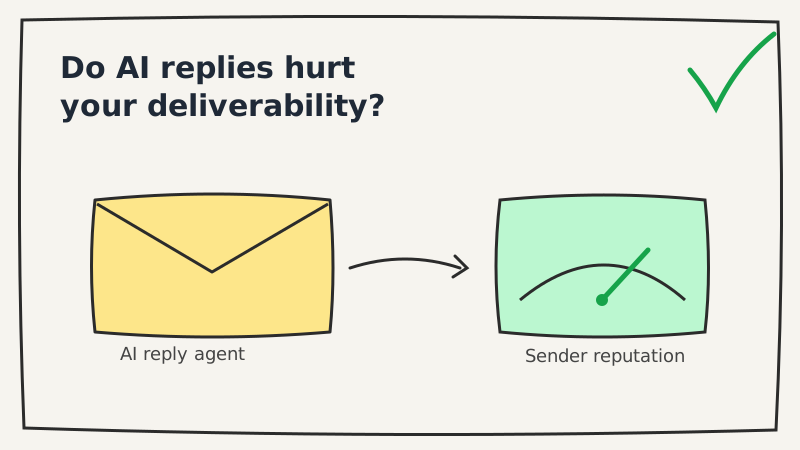
Do AI Reply Agents Hurt Your Email Deliverability? What Actually Affects Sender Reputation
There is a fear that comes up almost every time a sales team considers automating their cold replies: “If a bot is sending emails from my domain, won’t the inbox providers flag me as spam?”
It is a reasonable worry. You spent months warming up your domains, watching your spam rate, and nursing your sender reputation. The last thing you want is an automated tool torching all of that in a week. So before you hand any part of your inbox to software, it is worth understanding what actually drives deliverability, and where an AI reply agent sits in that picture.
The short version: deliverability is governed by a small set of technical and behavioral signals, and replying to people who already replied to you is one of the safest things you can do for those signals. But the details matter, so let’s walk through them.
What inbox providers actually measure
Gmail, Outlook, and the other mailbox providers do not care whether a human or a machine typed an email. They cannot tell, and they do not try. What they measure is a bundle of signals that predict whether recipients want your mail:
- Authentication. Are your SPF, DKIM, and DMARC records valid and aligned? This is pass or fail, and it has nothing to do with who writes the message.
- Spam complaints. What percentage of recipients hit the “report spam” button? Anything above roughly 0.3% starts to hurt you.
- Engagement. Do people open, reply, and move your mail out of spam? Replies are the strongest positive signal there is.
- Bounce rate. How many messages hit dead or invalid addresses? High bounces tell providers you are not maintaining a clean list.
- Sending patterns. Sudden spikes in volume, sending to stale lists, or hammering a cold domain all look suspicious.
- Spam traps. Hitting recycled or pristine trap addresses is a fast way to get blocklisted.
Notice what is not on that list: “uses automation to compose replies.” The provider sees a reply going to someone who emailed you first. From a reputation standpoint, that is close to ideal traffic.
Why replying is good for your reputation
Here is the part most people get backwards. Inbox providers treat two-way conversations as a trust signal. When a prospect replies to your cold email and you reply back, you are creating exactly the kind of engaged thread that providers reward. Each genuine exchange tells Gmail, “these two parties want to talk to each other.”
An AI reply agent, by definition, only sends messages into existing threads where the recipient already engaged. It is not blasting new cold messages to strangers. So the traffic it generates is the highest-quality traffic on your domain. If anything, responding quickly and consistently to replies lifts your reputation rather than lowering it, because you are turning one-shot sends into conversations.
This is the opposite of what happens when replies sit unanswered. Threads that die after one reply, prospects who never hear back, leads who give up: none of that helps your standing, and the lost revenue is the bigger cost. Speed of response is a recurring theme on this blog for a reason, and deliverability is one more argument for it.
Where deliverability actually breaks
If your inbox placement drops, an AI reply agent is almost never the cause. The real culprits are upstream, in the cold outbound itself:
1. Dirty lists and high bounce rates
This is the number one killer. If you are sending cold campaigns to a list full of invalid, outdated, or guessed-at addresses, your bounce rate spikes and providers throttle you fast. No reply agent can save a domain that is bouncing 8% of its sends.
This is squarely a list-hygiene problem, and it is solved before you ever hit send. Running your prospect list through a verification tool like Scrubby removes the invalid and risky addresses that drive bounces and protects the sender reputation your reply agent depends on. Clean inputs are the foundation; automating replies on top of a bouncing domain just automates the symptoms.
2. Aggressive cold volume on under-warmed domains
Pushing 500 cold emails a day from a domain you warmed up last week is a reputation gamble. The fix is gradual ramp-up and sane daily limits, not anything to do with how you handle the replies that come back.
3. Spammy content and broken authentication
Spam-trigger language, link-heavy templates, image-only emails, and missing or misaligned SPF/DKIM/DMARC all drag you down. Again, these are properties of your sending setup, not your reply workflow.
4. No engagement on outbound
If almost nobody opens or replies, providers conclude your mail is unwanted. The cure is better targeting and better copy, plus actually responding to the people who do engage so those threads stay alive.
The pattern should be clear: deliverability problems live in the cold-send layer. Underfive’s Unified Inbox operates in the reply layer, after a human has already chosen to engage, which is the safest place on your domain to add automation.
How to deploy a reply agent without any deliverability risk
You can get all the speed benefits of automated replies while keeping your reputation pristine. A few practices:
- Keep cold sending and reply handling clean and separate in your mind. Most deliverability hygiene work belongs to the outbound campaign, not the reply agent. Verify your lists, warm your domains, and watch your spam rate as you always would.
- Let the agent reply in-thread. Responses should thread under the original conversation, not start fresh emails. In-thread replies inherit the engagement context and look exactly like normal correspondence, because they are.
- Match volume to reality. A reply agent only sends as many messages as you get replies. That volume is naturally self-limiting and tiny compared to your outbound, so it will not trip any volume alarms.
- Keep authentication tight. Make sure the sending identity your agent uses has valid SPF, DKIM, and DMARC, just like your cold-send identity. This is a one-time setup check.
- Hand off to a human when the thread gets hot. When a reply turns into a booking conversation, you want a frictionless path to the calendar. Pairing your reply agent with a calendar-invite tool like Kali keeps the momentum without bouncing the prospect around, and booked meetings are about as engaged as a thread can get.
The bottom line
The fear that AI reply agents hurt deliverability comes from conflating two different things: sending cold mail to strangers, and replying to people who already wrote to you. The first carries real reputation risk and demands clean lists, warmed domains, and careful volume. The second is among the safest traffic your domain will ever carry.
If you want to protect your inbox placement, focus your energy where the risk actually lives. Verify your prospect lists before you send, warm your domains properly, keep your authentication aligned, and watch your bounce and complaint rates. Do that, and adding an AI reply agent on top does not threaten your reputation. It strengthens it, by turning more of your sends into the two-way conversations that inbox providers trust most.
Deliverability is won in the cold-send layer. Replies are where deals are won. You do not have to choose between them, and automating one does not put the other at risk.